
Raised Footprints in Snow
In extremely cold places, such as in Antarctica or in high altitudes, sometimes you get to see a peculiar phenomenon – footprints that are raised rather than depressed in the snow. What actually happens is when you step in the snow, the snow gets compressed and hardens, and then the wind blows the loose snow away leaving the once sunken footprints standing hard and proud on the surface. Eventually, the hardened snow gets eroded as well, but it takes weeks or even months. Raised snow footprints can last quite a while before all traces of the footprints are eroded away.
Because it requires more than a gale to blow away snow, raised footprints are often taken as an indicator of windslab and in mountain slopes, as potential avalanche danger. This is why you won’t see raised footprints in your backyard, unless you live in McMurdo.

Raised footprints on the summit of Blencathra, England.

Photo: Richard Wiles
Raised footprint in Snowdonia, north Wales.

Photo: Gerald Davison
Raised footprint near McMurdo Station.
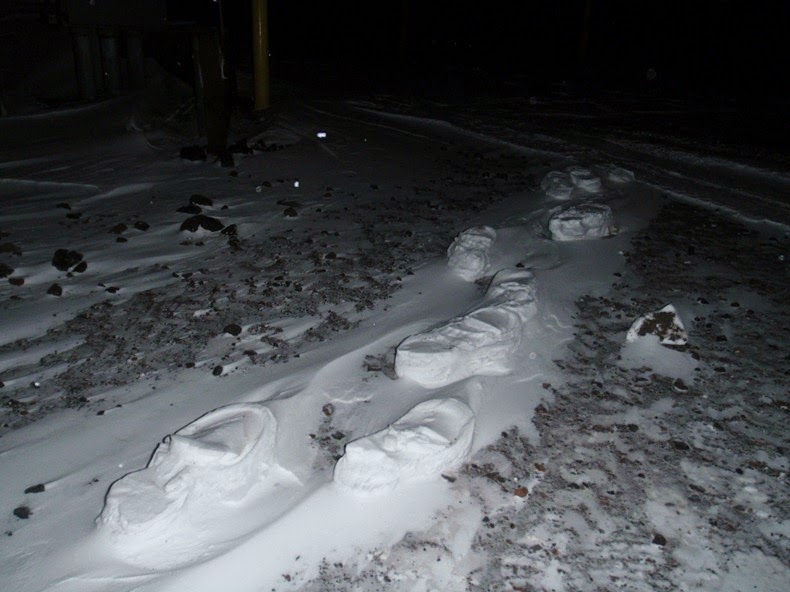
Photo: Alan R. Light

Photo: Alan R. Light

Photo: Alan R. Light

Photo: Alan R. Light
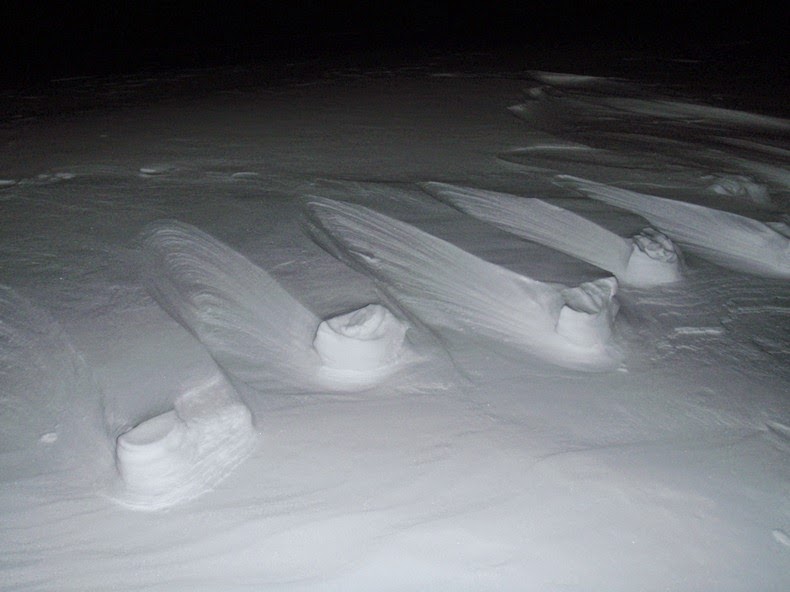
Photo: Alan R. Light

Photo: Alan R. Light
Raised dog footprints in Antarctica.

Photo: Cool Antarctica

Photo: Graham Rowbotham
Raised footprints in Anie, Stirling, Great Britain.

Photo: Geograph
Raised footprints on Foulshiels Hill, Great Britain.

Photo: Geograph
Raised footprints on Bear Mountain, Alaska.

Photo: Eric Matthes
Source: Amusing Planet
Because it requires more than a gale to blow away snow, raised footprints are often taken as an indicator of windslab and in mountain slopes, as potential avalanche danger. This is why you won’t see raised footprints in your backyard, unless you live in McMurdo.
Raised footprints on the summit of Blencathra, England.
Photo: Richard Wiles
Raised footprint in Snowdonia, north Wales.
Photo: Gerald Davison
Raised footprint near McMurdo Station.
Photo: Alan R. Light
Photo: Alan R. Light
Photo: Alan R. Light
Photo: Alan R. Light
Photo: Alan R. Light
Photo: Alan R. Light
Raised dog footprints in Antarctica.
Photo: Cool Antarctica
Photo: Graham Rowbotham
Raised footprints in Anie, Stirling, Great Britain.
Photo: Geograph
Raised footprints on Foulshiels Hill, Great Britain.
Photo: Geograph
Raised footprints on Bear Mountain, Alaska.
Photo: Eric Matthes
Source: Amusing Planet
Related Posts:
Raised Footprints in Snow
 Reviewed by Eli Snow
on
4:54 AM
Rating:
Reviewed by Eli Snow
on
4:54 AM
Rating:
Reviewed by Eli Snow
on
4:54 AM
Rating:


+-+This+is+Alaska's+Muir+Glacier+&+Inlet+in+1895.+Get+Ready+to+Be+Shocked+When+You+See+What+it+Looks+Like+Now..jpg)
In extremely cold places, such as in Antarctica or in high altitudes, sometimes you get to see a peculiar phenomenon – footprints that are raised rather than depressed in the snow. What actually happens is when you step in the snow, the snow gets compressed and hardens, and then the wind blows the loose snow away leaving the once sunken footprints standing hard and proud on the surface. Eventually, the hardened snow gets eroded as well, but it takes weeks or even months. Raised snow footprints can last quite a while before all traces of the footprints are eroded away.best cotton duvet sets , double bed razai price
ReplyDeleteAdds value to the property. french drains OKC
ReplyDeleteThese snow prints beautifully capture nature’s transient art. Similarly, CIPD students often leave their own marks through assignments though sometimes guidance is needed. Ethical CIPD assignment help can provide direction, much like footprints map a path forward. A lovely visual for academic journeys.
ReplyDeleteThe blog post explains the fascinating phenomenon of raised snow footprints clearly and engagingly, making complex natural processes easy to understand. The step-by-step description of snow compression, hardening, and erosion is informative and keeps the reader’s attention. To enhance readability, adding a diagram or breaking the text into shorter paragraphs could help. For students exploring scientific explanations or writing descriptive assignments, services like HR Assignment Help UK can provide structured guidance, while platforms such as Rapid Assignment Help offer support in presenting accurate, well-organized content in a polished and professional way.
ReplyDelete