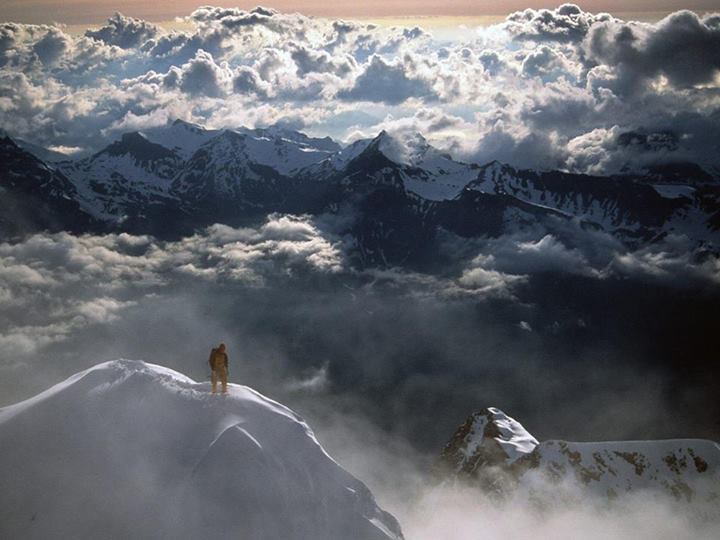
François Bon and Antoine Montant combine skiing and flight in this Eiger film from the Swiss Alps. A small wing travels above each skier as the descent moves between snow contact and airborne sections. The combination is usually described as speed riding or ski-gliding. Calling it simply kite skiing misses the distinctive way the wing becomes part of the descent.

Skiing and flight on the same mountainside
The important visual detail is the relationship between skier, wing and mountainside. During a skiing section, the slope provides the immediate reference; during flight, the space beneath the athlete becomes much more apparent. That changing relationship gives the film its rhythm. It is a specialist mountain performance, not a demonstration of a normal downhill run with an extra piece of equipment.
Speed riding is different from snowkiting
Snowkiting commonly uses a kite's pull to move a skier or snowboarder across snow. Speed riding combines skiing with a small gliding wing and the possibility of airborne sections. The distinction explains why these images look different from a kite crossing an open snowfield. It also explains why conventional skiing experience alone does not describe the skills involved. [1]
Explore more: a different airborne Alpine performance; another film combining snow sport with flight.
Video: Ski-Gliding the Eiger (published by adamkravetz).
What is known about the Eiger descent
The original introduction named both athletes and gave June 14 as the day of the descent, calling it a first. It supplied no year or supporting record, so the exact date and priority claim remain unconfirmed here. The named mountain and athletes identify the film; its exact place in the chronology of Eiger descents is less certain.
Look for the transitions between snow and air
For a closer look, compare moments when the skis remain against the surface with those when the rider is clearly suspended above it. The change in scale can be striking: a skier visible against a slope becomes a small figure against a much wider mountain face. Keep the film as a viewing experience; the BHPA describes specialist progressive training for small-wing flight, rather than learning by copying an online descent. [2]


No comments